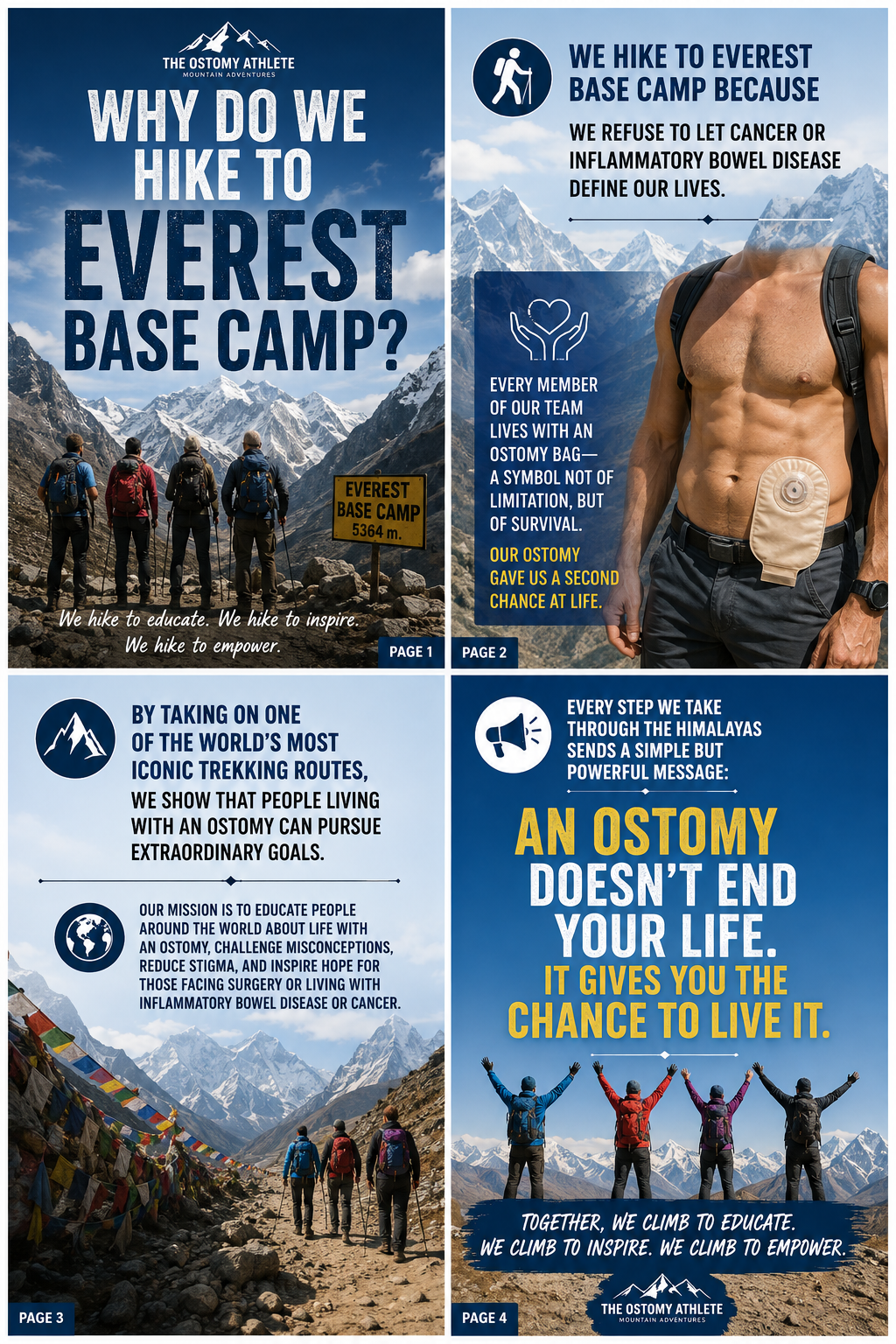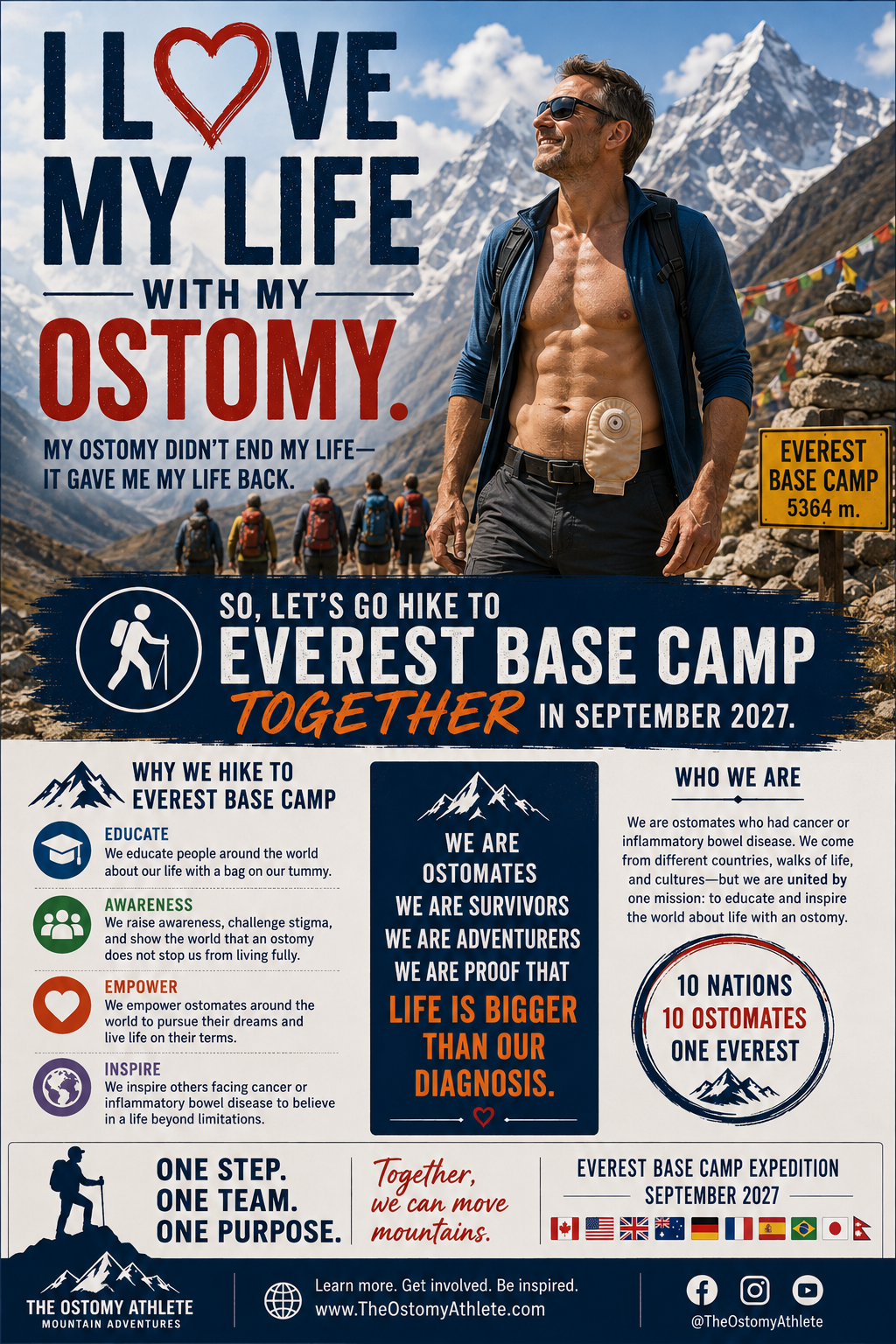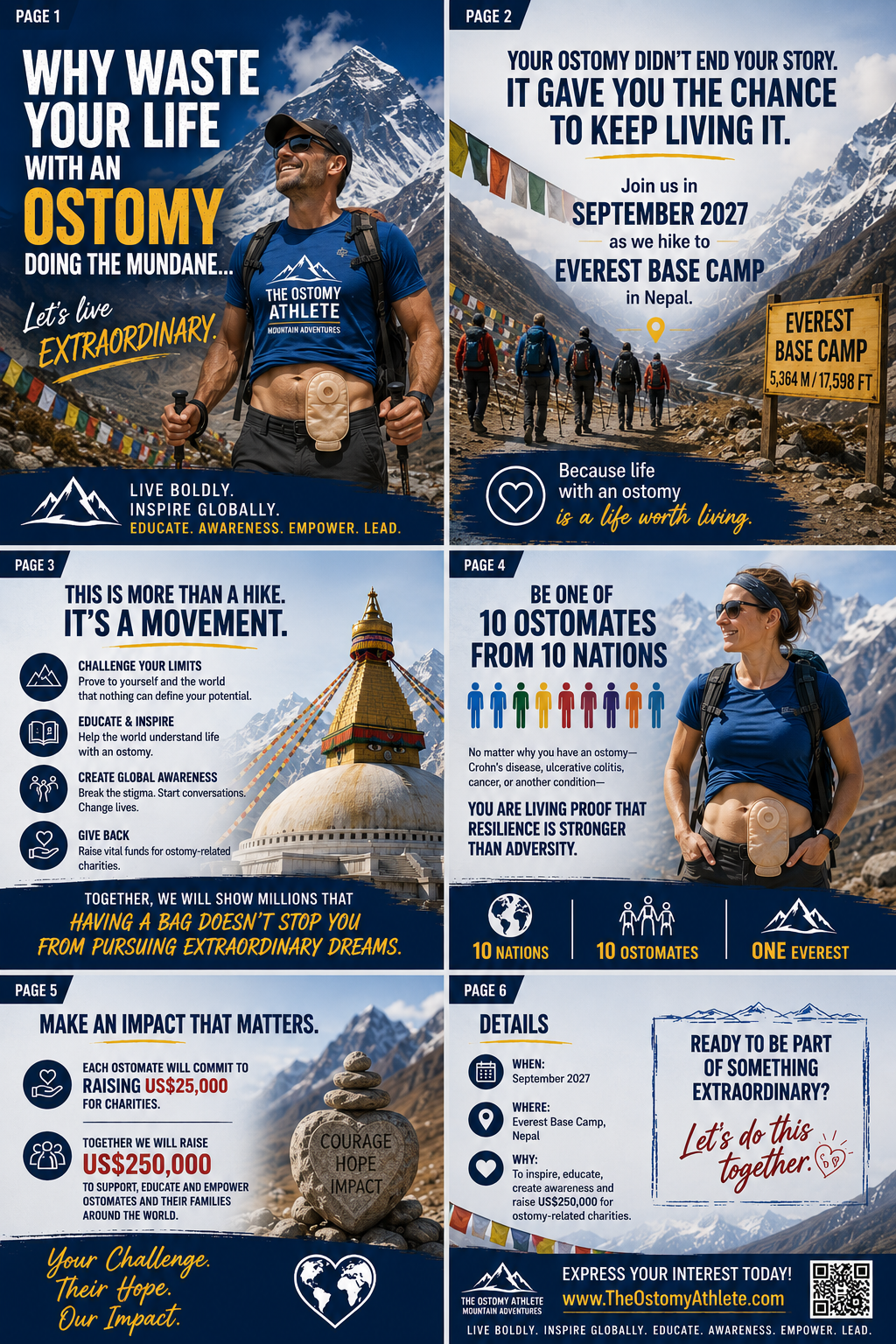
We are an inspirational story.
We are apart of the broader global community of the invisibly disabled.
More particularly, we represent three communities:
Sufferers of Inflammatory Bowel Disease (IBD - Crohn’s Disease, Ulcerative Colitis)
Cancer
Ostomy
We have no large intestine. We have an ostomy. We have inflammatory bowel disease. We have had cancer. We undergo 10-25 surgeries in our lifetime.
And yet, we persevere to explore earth’s most raw, hostile, extreme natural environments. We push the limits of our human capabilities physically, emotionally and psychologically.
The Ostomy Athlete is a mountaineering team of men & women from Canada, the United States & the United Kingdom.
Together we are climbing many of the world’s tallest mountains including the:
Seven Summits
Volcanic 7 Summits
Explorer’s Grand Slam
Skiing the Messner Route to the South Pole (1138 km journey).
This pursuit is an epic athletic & physical achievement unlike any other. The majesty of the mountains tell stories and so will we.


Meet the Team
-
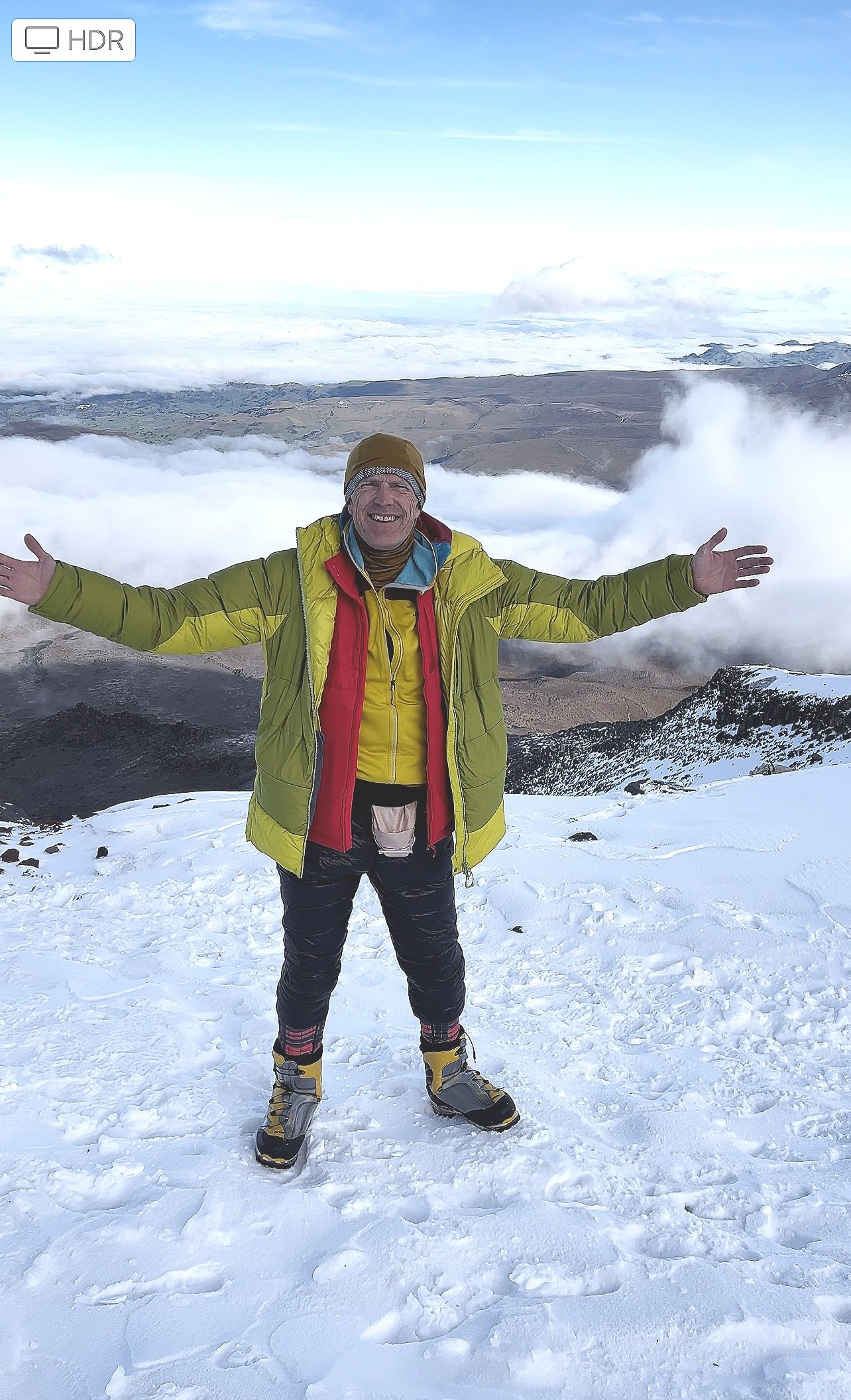
Patrick Belton
Patrick Belton | Canada
Founder, The Ostomy Athlete | Mountaineer | Adaptive Athlete | IBD and Ostomy Advocate
For Patrick Belton, mountaineering represents far more than reaching the world’s highest summits. It represents reclaiming a life that inflammatory bowel disease nearly destroyed.
Diagnosed with ulcerative colitis at 21 and later Crohn’s disease, Patrick has endured decades of debilitating illness, numerous intestinal surgeries, the removal of his entire large intestine and approximately half his small intestine, and life-threatening complications, including pulmonary embolisms, blood clots, severe malnutrition, and organ damage. On two occasions, his survival was uncertain.
Once an accomplished business professional and lifelong athlete, Patrick lost nearly a decade of his life to illness, repeated hospitalisations, isolation, and the collapse of his career and financial security.
Following life-changing medical treatment and a long recovery, Patrick rediscovered his passion for physical adventure in the mountains. Today, based in the Canadian Rockies, he is a mountaineer, wilderness first aid-certified outdoor guide, and founder of The Ostomy Athlete.
Bringing together adaptive athletes from Canada, the United States, and the United Kingdom, Patrick established The Ostomy Athlete to challenge perceptions of disability and demonstrate what remains possible after serious illness and major intestinal surgery.
His ambitious expedition objectives include the Seven Summits, the Volcanic Seven Summits, and the Explorer’s Grand Slam — climbing the highest mountain on each continent and undertaking expeditions to both geographic poles.
Through mountaineering, international advocacy, education, and charitable fundraising, Patrick is determined to help others living with Crohn’s disease, ulcerative colitis, ostomies, and cancer rediscover confidence, independence, and a sense of possibility.
His message is simple:
“My IBD and ostomy don’t limit what’s possible. They’re part of the story.”
Own Your Scars. Own Your Story. Live Fearless. Live Forward.
—————————————————
My Life as an Ostomate with Crohn’s Disease
A Personal Essay
From Patrick
There are moments in life that divide everything into before and after. For me, Crohn’s disease did not arrive as one dramatic moment. It arrived gradually, then relentlessly, and eventually consumed almost every part of the life I thought I was going to have. My ostomy became another dividing line: there was the person I was before disease and surgery, and there is the person I have become afterward.
I was diagnosed with ulcerative colitis when I was 21 years old. At 37, that diagnosis was changed to Crohn’s disease. Those simple medical words cannot begin to describe the decades between them. Crohn’s is called an inflammatory bowel disease, but that description feels far too contained and clinical for what it can do to a human life. It affected my body, career, relationships, confidence, independence and identity. It followed me into restaurants, workplaces, hospitals and friendships. Eventually, it followed me onto mountains.
Over the years I underwent surgery after surgery. My large intestine was removed, and eventually approximately half of my small intestine was gone as well. I lived with a J-pouch and endured a failed ostomy reversal. There were blood clots and pulmonary embolisms, severe dehydration, malnutrition, anemia, kidney problems, fractures, dental problems, skin cancers and exhaustion that sleep could not solve. There were times when maintaining a healthy body weight seemed almost impossible. There were also moments when survival itself was uncertain.
Yet some of the deepest consequences were invisible. People can understand an operation because they can see the scar. They understand a hospital admission because there is a bed, an IV and a diagnosis. It is harder to understand what decades of chronic illness can do to identity. You lose pieces of yourself quietly. A career becomes difficult to maintain. Social invitations become complicated. Relationships change. Financial security can disappear when your body repeatedly prevents you from working normally. The world keeps moving while you fight simply to remain part of it.
One of the themes in the videos I have made is isolation. In one scene, mountain and wilderness images move behind words about Crohn’s disease and isolation: people wonder why you hide away so much, without understanding the vulnerability, pain, nervous-system overload and constant grind beneath the surface. That scene captures something medical charts rarely show. Chronic illness can make you withdraw not because you have stopped caring about life or people, but because simply getting through the day can consume everything you have.
For years, washroom access dictated where I could go and what I could do. Something most people barely think about could determine whether I left home. Then came 2009 and the moment that changed my relationship with my body forever.
I remember waking after ostomy surgery and confronting a body I did not recognize in the same way anymore. There was a stoma on my abdomen. There was a pouch attached to me. The basic bodily functions that had been automatic for my entire life now required an entirely new way of thinking and living. That waking-up scene is one of the defining images of my story because an ostomy is not merely a surgical procedure. You awaken to a physical reality that can challenge identity, confidence, dignity and every assumption you once had about your body.
At first, everything was unfamiliar. But the meaning of that pouch changed over time.
My ostomy gave me possibilities.
That distinction matters because ostomies are often spoken about as though they represent the end of something: the end of normality, confidence, intimacy, sport, travel or adventure. My experience taught me something different. An ostomy can also be the beginning of getting something back.
It did not magically erase Crohn’s disease. It did not eliminate complications or return the years illness had taken. My ileostomy creates serious challenges. Output can be extremely fast, making hydration and electrolyte replacement essential. Nutrition requires constant attention. In remote environments and at altitude, those demands become even greater. But I refuse to define my ostomy exclusively by its limitations.
Instead, I began asking a different question: What can I still do?
Eventually that became a much larger question: What if I attempted things most people would never imagine an ostomate doing?
The mountains became part of my answer.
Mountaineering might seem a strange place to search for freedom after years of fighting a disease that has already pushed my body to its limits. For me, it makes perfect sense. In the mountains I am not simply a patient, a medical chart or a collection of surgeries. I am not the man who spent years desperately searching for washrooms. I am not defined by the pieces of intestine surgeons removed from my body.
I am a mountaineer.
Every step upward becomes a declaration that my life belongs to me. Mountains do not care whether I have an ostomy. They do not care about my scars, medical history or how many nights I have spent in hospital beds. They demand preparation, discipline, judgment, resilience and respect. I find something liberating in that honesty.
Living with an ostomy at altitude is not easy. Physical exertion, dry mountain air, cold and altitude magnify dehydration risk. Food has to become fuel even when altitude suppresses appetite. Ostomy supplies must be carried and protected. The pouch has to be managed where there may be no washroom, running water or privacy. These are real problems, but I have learned to see them as problems to solve rather than reasons to stop living.
The contrast between my video scenes matters to me. One image is the man waking after surgery in 2009, forced to comprehend a changed body. Another part of the story is the private world of Crohn’s disease: isolation, pain, vulnerability and the things other people cannot see. Then there are the outdoor scenes—the mountains, trails, water and wilderness—where the story moves outward again. Together they show the arc of my life more accurately than a list of diagnoses ever could: illness closed my world down; the ostomy changed my body; adventure helped me begin expanding my world again.
That philosophy became larger than my own adventures. Through The Ostomy Athlete, I want to change how the world sees people living with ostomies and how ostomates see themselves. I want a newly operated patient lying in a hospital bed to understand that an ostomy does not automatically mean a smaller life. I want someone afraid of showing a pouch to see ostomates standing proudly with theirs. I want people living with Crohn’s disease, ulcerative colitis, cancer and other conditions that lead to ostomy surgery to know their stories do not have to end at surgery.
They can begin again there.
That is why adventure and advocacy have become inseparable for me. When ostomates hike toward Everest Base Camp, climb mountains or attempt ambitious expeditions, the purpose is not simply to stand somewhere high and take a photograph. The mountain becomes a platform. Every kilometre walked and every metre climbed creates an opportunity to educate someone about life with an ostomy. Adventure can raise awareness, raise money and challenge stereotypes. Most importantly, it can give another ostomate permission to imagine possibilities they had stopped considering.
I know what it is like when illness makes the world smaller. I know the loneliness of chronic disease and the frustration of hearing that you “look fine” when internally you are fighting every day. People see the person standing in front of them. They rarely see the surgeries, scars, fear, exhaustion and memories underneath the clothing.
For years, it sometimes felt as though Crohn’s disease was writing my story for me. Disease decided where I could go. Disease influenced whether I could work. Disease affected relationships and dictated what happened to my body. Eventually I decided that, wherever possible, I wanted to take the pen back.
I cannot erase my surgeries. I cannot put my intestine back into my body. I cannot pretend living with an ileostomy is always easy. What I can control is what I attempt to do with the life still in front of me.
That is why I choose adventure. It is why I choose mountains. It is why I choose advocacy. And it is why I refuse to hide my ostomy.
There was a time when I could look at the pouch attached to my abdomen and see everything disease had taken away. Today I see something different. I see survival. I see adaptation. I see possibility.
I do not need to pretend chronic illness is a gift. Crohn’s disease has taken too much from me to romanticize it. There are experiences I would never choose and would never wish on another person. But I can choose what I do with those experiences.
My ambition now reaches beyond simply surviving. I want to stand on mountains. I want to explore the world. I want to help other ostomates discover adventure. I want to raise money for people whose illnesses and surgeries have left them financially vulnerable. I want to educate people who have never seen an ostomy. I want someone facing surgery tomorrow to see what an ostomate can do today.
Most of all, I want to live—not cautiously waiting for the next medical crisis, not apologizing for the pouch attached to my body, and not allowing Crohn’s disease to have the final word.
My ostomy is part of my body, but it is not the boundary of my life.
Crohn’s disease changed the direction of my story. Surgery changed my body forever. There have been moments when both nearly ended my life. They did not. I am still here. And as long as I am here, there is another trail to walk, another mountain to climb, another person to encourage and another adventure waiting beyond the horizon.
I have spent enough of my life being defined by what disease took from me. The rest of it will be defined by what I choose to do with what remains.
Live fearless. Live forward.
https://innovativemedicines.ca/newsroom/patient-stories/meet-patrick-belton/
https://open.spotify.com/episode/0zrMPG3zlP5QZCBpLF8PtG?si=RWJB4TRgRn-_rumB7fiFSA
https://toronto.citynews.ca/2023/03/09/ostomy-athletes-seven-summits-toronto-canada/
-

Charlotte Foley
Charlotte Foley | United States of America
Occupational Therapist | Mountaineer | Founder, Restorative Ostomy Solutions
Diagnosed with inflammatory bowel disease at 17 and having undergone six major surgeries, Charlotte Foley understands firsthand the challenges of rebuilding life after serious illness. Now living with Crohn’s disease and a permanent ileostomy, she has transformed her experience into a career helping others regain strength, independence, and confidence after ostomy surgery.
A Boston University-trained occupational therapist and founder of Restorative Ostomy Solutions, Charlotte is also a passionate mountaineer and wilderness adventurer based in Alaska. Her outdoor pursuits include backcountry skiing, backpacking, hiking, and a 2022 attempt on Denali. Her athletic story also includes a cross-country bicycle journey during college, despite major IBD-related challenges.
As a member of The Ostomy Athlete, Charlotte brings together rehabilitation expertise, personal resilience, and a passion for adventure to challenge perceptions of what life with an ostomy can look like.
Her mission: To help people move beyond recovery and rediscover a life of possibility.
Editorial note: Confirm the precise dates and details of Charlotte’s college cycling journey and any professional recognition with Charlotte before website publication.
https://restorativeostomysolutions.com/
https://ostomysolutions.samcart.com/products/the-ostomy-surgery-recovery-guide
https://www.youtube.com/live/mxsL8QZEMGk?si=zeziN1nuhnV3VsJg
-
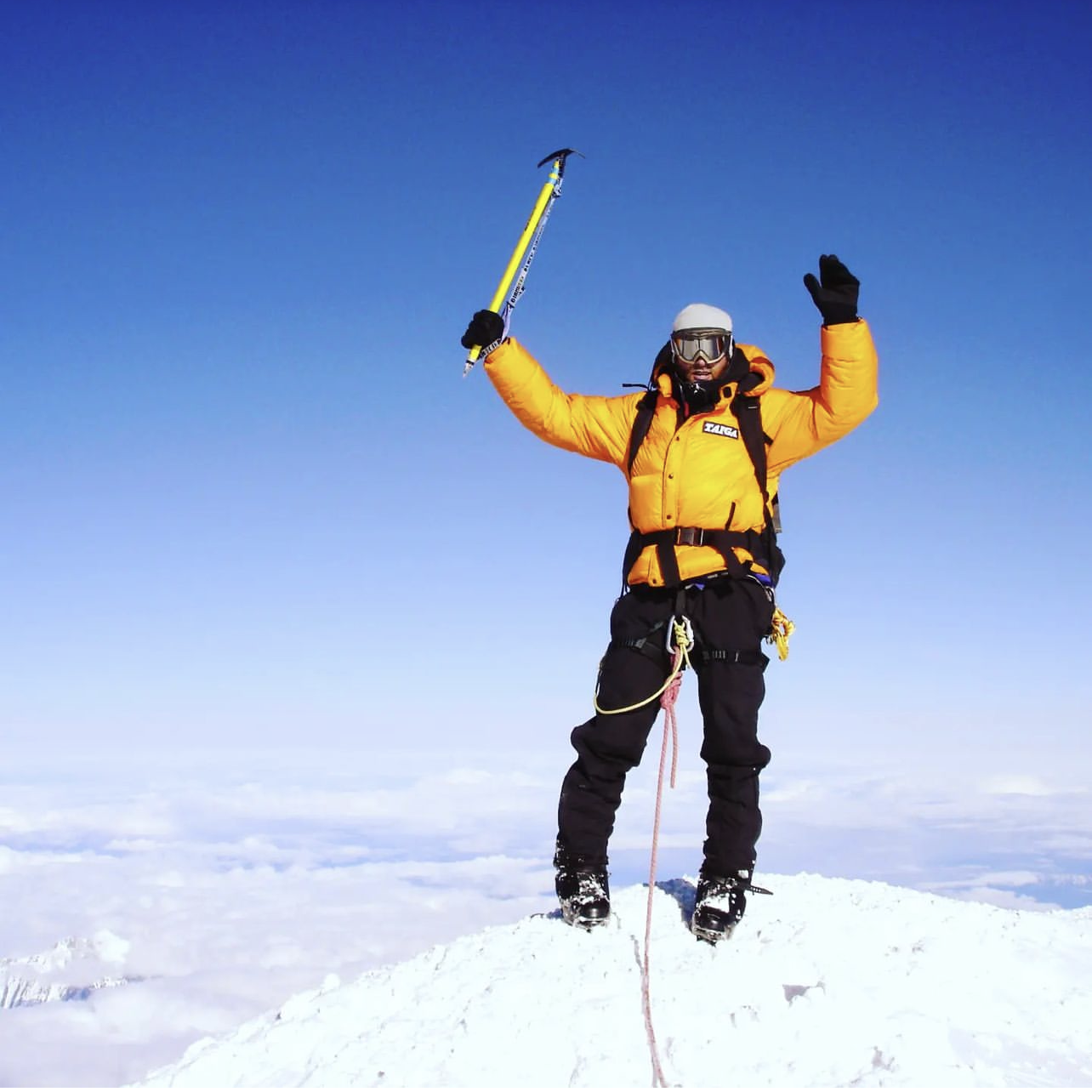
Rob Hill
ROB HILL
Canada | The Ostomy Athlete
Pioneering Mountaineer | Seven Summits Adventurer | Founder, No Guts Know Glory | IBD & Ostomy Advocate
For Canadian mountaineer Rob Hill, the world’s highest mountains became a powerful platform for challenging misconceptions about Crohn’s disease, ostomy surgery and physical disability.
Diagnosed with inflammatory bowel disease at 23, Rob endured debilitating illness, severe weight loss and surgery to remove his large intestine, leaving him with a permanent ileostomy. Once an energetic runner and adventurer, he saw his weight fall from 185 to 105 pounds. Rather than surrendering his ambitions, Rob embraced life with an ostomy as a second chance.
He launched No Guts Know Glory, an extraordinary international mountaineering campaign to raise awareness of intestinal disease and demonstrate what people living with an ostomy can accomplish. From 2002 onward, he climbed Elbrus, Kilimanjaro, Aconcagua, Denali, Vinson Massif and Carstensz Pyramid. In May 2010, according to The Ostomy Athlete team’s account and its reported live video footage, Rob also reached the summit of Mount Everest, completing his Seven Summits quest.
Rob also founded the Intestinal Disease Education and Awareness Society (IDEAS), dedicated to education, advocacy and improving quality of life for people affected by intestinal diseases, including children, young adults and their families.
Through decades of mountaineering, public speaking and advocacy, Rob has helped change the conversation around Crohn’s disease and ostomy surgery. As a member of The Ostomy Athlete, he brings an exceptional legacy of endurance, leadership and determination to an international team committed to proving that a diagnosis need not define the limits of a life.
“Life with an ostomy was my second chance and I was not going to waste it.”
NO GUTS KNOW GLORY • OWN YOUR SCARS. OWN YOUR STORY.
https://on.soundcloud.com/MHulXPr2aji8v9NvWI
https://goingup2010.wordpress.com/2010/06/15/rob-hill-a-pioneer-mountaineer-with-ileostoma/
-

Jessica Upton
Jessica Upton | United Kingdom
Specialist Gastroenterology Dietitian | IBD Advocate | Adaptive Athlete
With more than 25 years of personal experience living with inflammatory bowel disease and over 12 years as a specialist dietitian, Jessica Upton brings clinical expertise, lived experience and competitive sporting ambition to The Ostomy Athlete.
Now living with a permanent ileostomy, Jessica races road and mountain bikes and plays competitive tennis. She is passionate about challenging misconceptions surrounding Crohn’s disease, ostomy surgery, nutrition and physical capability.
Her professional career spans the NHS, international healthcare, specialist gastroenterology, bariatric medicine, and published nutritional research.
As a member of The Ostomy Athlete’s international team, Jessica draws on her athletic pursuits and professional expertise to show that chronic illness need not define a person’s ambitions.
Hope, Inspire, Achieve
Our team members each have a form of IBD (Intestinal Bowel Disease), Ostomy & Stoma because they have had their entire large colon/bowel surgically removed.